
Search
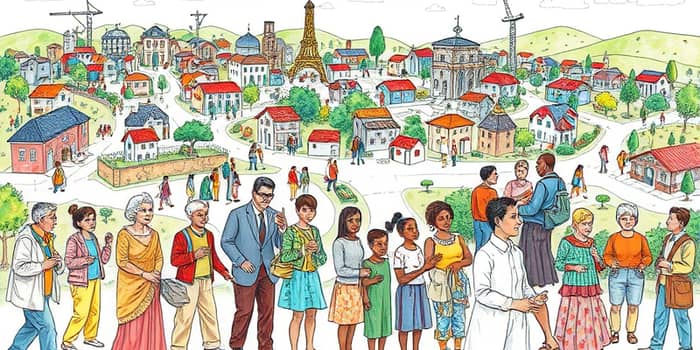
Across the 21st century, unprecedented changes in how populations grow, age, and move are reshaping global economies. These shifts present both challenges and opportunities for policymakers, businesses, and communities worldwide.
Global population dynamics are entering a new phase. After rising steadily for decades, the world is projected to peak at approximately 10.3 billion toward the end of this century, then begin a long-term decline. Behind this trajectory lie two interconnected forces: falling fertility and rising longevity.
Two-thirds of humanity today live in countries where fertility is below the replacement rate of 2.1 children per family. Major economies like Japan and parts of Europe face potential population declines of up to 50 percent by 2100, while the global median age climbs from 31 in 2025 to an astonishing 42 by 2100.
As of mid-2025, the world counts about 8.23 billion people. Yet beneath this aggregate lie stark contrasts: Europe’s median age stands at 43, while Africa’s is just 19. By 2100, Africa will still be the youngest region—its median age rising to 35—while Europe and East Asia become profoundly aged.
Shifting population structures exert a powerful influence on economic growth, labor markets, and public finances. As the share of working-age adults (15–64) declines in advanced economies from 67 percent today to 59 percent by 2050, productivity gains and immigration policies become critical to sustaining output.
A rapidly aging society demands significant wealth transfers from younger cohorts. By midcentury, seniors (65 plus) are expected to account for 25 percent of global consumption—double their share in 1997. This seniors consumption-income gap places pressure on pension systems and motivates reforms in retirement age and benefit formulas.
Technological advancements offer a path to mitigate labor shortages. Automation, robotics, and artificial intelligence could boost productivity by two to four times current rates. However, realizing such gains requires massive investment and clear strategies to integrate new technologies into the workforce.
Confronted with these long-term trends, governments and societies must pursue multifaceted strategies. No single policy can reverse demographic headwinds, but concerted action can soften their economic blow and harness emerging opportunities.
Successfully boosting fertility at scale remains largely untested. Meanwhile, many countries are already experimenting with retirement age hikes and flexibility measures to keep older workers engaged. Immigration policy also plays a vital role: Germany, Canada, and Australia rely heavily on newcomers to maintain labor supply.
The demographic transformations now under way are without modern precedent outside Africa. As populations age and, in some regions, decline, economic models built on perpetual growth will face fundamental challenges. Yet history shows societies can adapt through innovation, policy reforms, and international cooperation.
Policymakers should prioritize integrated approaches that balance fertility incentives, labor market flexibility, and technological investment. Businesses must anticipate changing consumer demands, tailoring products and services for older demographics while tapping into emerging markets across Africa and South Asia.
Ultimately, managing long-term demographic shifts is a test of foresight and resilience. By embracing evidence-based policies and nurturing a culture of adaptability, communities can turn demographic headwinds into opportunities for sustainable, inclusive growth.
References