
Search
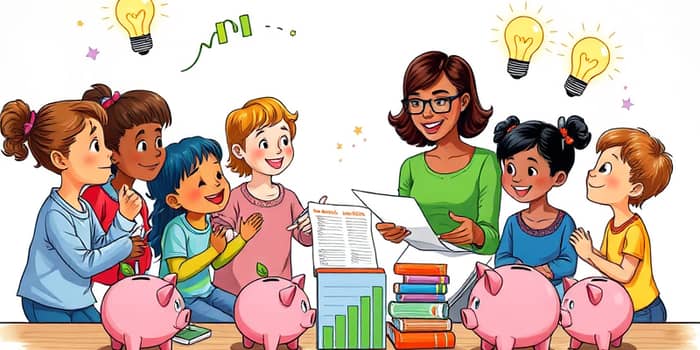
In an era where monetary decisions shape life trajectories, teaching financial habits to youth has never been more imperative. The data is stark: millions experience insecurity and missed opportunities due to gaps in knowledge. This article explores why systematic education can transform individual lives and fortify communities against economic volatility.
By weaving money management lessons into everyday learning, educators can harness curiosity and build critical period for habit formation. This synergy transforms abstract concepts into tangible skills that students carry throughout life.
Across the United States, 65% of Americans live paycheck to paycheck, facing the strain of meeting essential needs. This statistic underlines an alarming trend: despite paychecks, stability remains elusive for most families.
Emergencies exacerbate this fragility, as only 44 percent could handle emergencies.
Financial illiteracy carries a high cost. In 2023 alone, Americans lost an estimated $388 billion due to poor money management. Such losses resonate far beyond individual accounts, impacting national productivity and widening socioeconomic divides.
The psychological toll of financial stress is significant. Chronic worry affects mental health, academic performance, and social relationships. Equipping youth with practical tools early can reduce anxiety and foster a sense of control over their futures.
General literacy metrics have stagnated. US adults correctly answer just half of basic finance questions, with Gen Z and Millennials scoring the lowest. This plateau has persisted for nearly a decade.
Disparities extend beyond age. Lower-income individuals and women face significant confidence gaps, even as they navigate daily financial challenges.
Time spent navigating personal finance can be a drag on productivity. Those with low literacy are seven times more likely to waste hours resolving financial issues weekly, diverting energy from work, family, and community engagement.
Effective financial education covers eight key areas: understanding earnings and taxes, smart spending and budgeting, saving strategies, investment basics, debt management, insurance principles, risk comprehension, and identifying reliable financial resources. Mastery in one domain enhances performance in others, building a holistic skill set.
Despite comfort with borrowing and saving, many Americans hesitate when facing investment risks and advanced products. Addressing these gaps early can prevent costly missteps and foster more informed decision-making in adulthood.
For instance, understanding compound interest can empower young savers. A single dollar invested at a modest rate can double over decades. Yet many remain unaware of inflation’s corrosive effect on purchasing power.
Emerging evidence highlights the multiplier effect of youth financial programs. In households where children receive instruction, parents improve their own behaviors. One study found a 26 percent drop in loan arrears among families with financially educated kids.
Remarkably, families with daughters participating saw an even stronger shift: a 28 percent reduction in arrears and a nearly 7 percent boost in parental credit scores. These findings underscore the transformative power of engaging all family members in learning.
Consider a rural district where a week-long simulation doubled participants’ emergency savings rates. Practical exercises, such as mock loan applications, help demystify credit and cultivate confidence in managing debt.
Policymakers are responding. Over the past five years, 27 states have enacted financial literacy mandates, with 16 requiring standalone courses for graduation. Others integrate lessons into economics or social studies.
Internationally, more than 60 nations champion financial education to promote inclusion and stability. This global alignment signals a recognition that monetary competence underpins sustainable development and resilient communities.
Despite mandates, schools face challenges: limited teacher training, sparse resources, and competing curriculum demands. Successful districts invest in professional development and collaborate with local nonprofits to enrich classroom experiences.
Meta-analyses covering 76 experiments and over 160,000 participants demonstrate substantial gains in knowledge and behavior. Participants exhibit improved budgeting, enhanced credit management, and increased saving rates.
These interventions are both effective and affordable. Compared to core academic subjects, financial education yields comparable or greater benefits per dollar spent, delivering a strong return on investment for schools and policymakers alike.
Programs that blend classroom lessons with real-world practice—like school savings clubs or student-run credit unions—demonstrate sustained behavior change. Studies reveal these interventions remain effective even years after completion.
Despite clear benefits, progress remains uneven. Aggregate literacy levels show little upward movement, highlighting the need for sustained commitment. Short-term workshops often fail to produce lasting change.
False confidence further complicates outreach: many adults overestimate their skills, leading to risky financial decisions. Tailoring content to demographic needs and learning styles is crucial for overcoming these barriers.
Overcoming disengagement requires relatable content and peer support. Interactive elements, such as gamified budgeting apps, can maintain interest and reinforce concepts long after initial lessons conclude.
Implementing these strategies can dramatically increase program efficacy and foster a culture of financial responsibility from a young age.
Schools that piloted comprehensive modules saw a 30 percent increase in student savings participation. Such successes illustrate that theory, when paired with action, cements learning outcomes.
Community centers, employers, and financial institutions can all play supportive roles. Multi-generational workshops strengthen learning by encouraging parents and children to share insights and set joint goals. Incorporating multi-generational financial learning experiences cultivates shared accountability and fosters open dialogue about money matters.
Partnerships with community banks and credit unions can provide mentorship, resources, and real-world insights, bridging the gap between academic theory and financial practice.
Digital tools offer scalable solutions. Platforms that track spending, facilitate mock investments, and provide just-in-time advice empower learners to apply concepts immediately, reinforcing habits through practice.
The path forward demands holistic engagement. Schools, families, businesses, and governments must partner to weave financial education into every stage of life. Early interventions should be complemented by workplace programs and community initiatives.
a sustained, data-driven approach will close persistent gaps, ensuring that future generations inherit not just wealth, but the wisdom to grow and protect it. By prioritizing financial habits today, we equip youth to navigate tomorrow’s challenges with confidence and resilience.
As individuals, parents and educators can advocate for robust financial education policies. By raising awareness and sharing resources, we pave the way for a generation equipped to thrive financially.
References