
Search
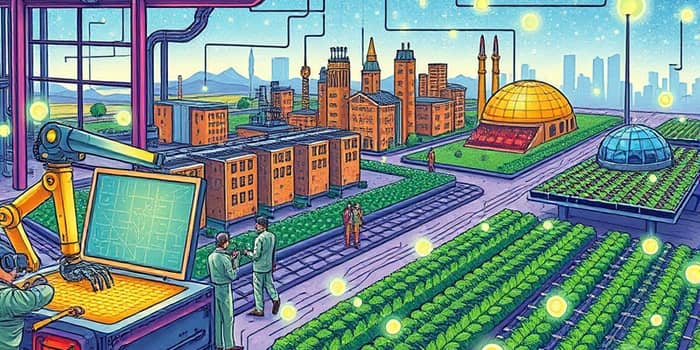
In 2025, the pace of innovation has reached an inflection point. From boardrooms to production floors, businesses face an unprecedented wave of change driven by cutting-edge technologies. This article explores how organizations can not only adapt but thrive amidst this transformation.
As we navigate this era, one truth remains clear: rapid advances in digital and physical technologies are rewriting the rules of competition and growth.
The bedrock of modern disruption lies in a handful of frontier technologies that amplify each other’s potential. By harnessing these tools responsibly, companies can unlock productivity, resilience, and new markets.
AI stands both as a standalone disruptor and as an accelerator for robotics, bioengineering, and energy optimization. By 2025, 76% of executives plan to use GenAI to reinvent business models at scale. From predictive maintenance in manufacturing to climate-resilient agriculture, generative AI systems are powering more accurate models and novel solutions.
Meanwhile, the semiconductor sector is surging. Fueled by AI chip demand, global revenues are growing double digits. Communications and data center chips now lead sales, underscoring the backbone required for next-generation computing.
At the same time, IoT connects sensors in factories, stadiums, and smart cities to deliver personalized experiences and new efficiencies. Cloud computing and data infrastructure investments—projected at $5.75 trillion in 2025—ensure that businesses can scale these capabilities without heavy on-premise burdens.
Biotechnology joins the conversation through climate tech innovations: carbon-capture microbes, climate-adaptive crops, and AI-driven early warning systems. Investors recognize that climate adaptation technologies and resilience systems will determine financial success in the decades ahead.
No industry remains untouched. Disruption here is not theoretical—it’s happening now, reshaping core processes and value chains.
The statistical landscape reveals both promise and urgency. Companies embracing automation report productivity leaps, while laggards risk obsolescence. Yet, the labor market is in flux: By 2030, 92 million jobs may be displaced, even as 170 million new roles emerge.
Cybersecurity costs are skyrocketing alongside digital adoption—cybercrime could top $10.5 trillion globally in 2025. Organizations must fortify defences as they open new digital frontiers.
With great opportunity comes great responsibility. Companies must establish robust frameworks to manage ethical, security, and governance risks.
The organizations best positioned to win are those that balance ambition with resilience. A healthy ecosystem of talent, leadership, and culture is vital.
Reskilling and upskilling programs must be at the heart of workforce strategies. With 60% of employers expecting skills gaps to widen, partnerships with educational institutions and modular learning platforms can bridge the divide.
Diverse leadership teams bring fresh perspectives. Data shows that boards with varied backgrounds excel at navigating uncertainty and unlocking creative solutions.
Balance aggressive innovation with risk governance to ensure that new technology delivers sustained value without unintended harm.
As 2025 unfolds, disruptive technologies will continue to rewrite industry playbooks. Organizations that embrace change, invest in their people, and adopt responsible frameworks will stand out as pioneers.
This is more than a technology conversation—it’s a human one. By aligning innovation with purpose, companies can build resilient, inclusive, and prosperous futures.
The time to act is now. Harness the power of AI, IoT, semiconductors, and biotechnology to shape industries and uplift communities worldwide. Your journey on the frontier of disruption starts today.
References