Search
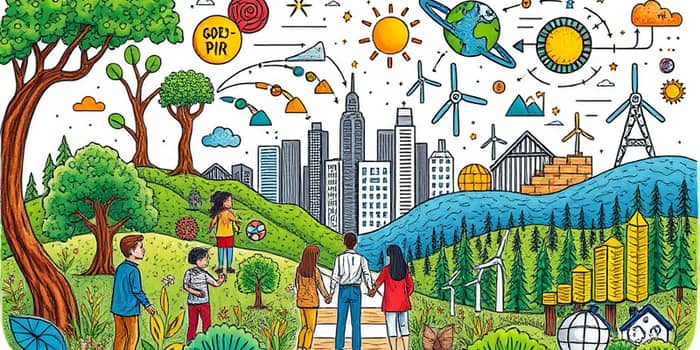
The global economic conversation has long revolved around Gross Domestic Product (GDP) as the primary gauge of national success. While this dominant indicator for assessing economic performance offers a useful snapshot of market activity, it falls short in capturing the full spectrum of human experience and ecological balance. As societies confront widening inequality, environmental crises, and social fragmentation, experts and policymakers increasingly argue for a more nuanced approach.
GDP measures the total value of goods and services produced, but it overlooks critical dimensions of well-being. It treats expenditures on pollution clean-up, natural disaster recovery, and healthcare costs as positive contributions to national output, without distinguishing whether these expenditures reflect genuine progress. This can lead to paradoxical outcomes, where environmental degradation or social unrest boost GDP figures without improving quality of life.
Moreover, GDP does not account for unpaid household work, community volunteer efforts, or ecosystem services—elements that significantly enhance societal resilience. Addressing climate change, preserving biodiversity, and investing in human capital are central to long-term prosperity, yet their value remains invisible in traditional accounts.
Launched by the United Nations and supported by numerous Member States, the initiative aims to complement GDP with a suite of indicators spanning economic, social, and environmental dimensions. Spearheaded by the High-Level Expert Group on Beyond GDP, this effort seeks to reshape global measurement frameworks in line with the 2030 Agenda for Sustainable Development.
Rather than replacing GDP, the initiative advocates for innovative dashboards and enriched accounting methods that inform better policymaking and reinforce efforts towards the Sustainable Development Goals (SDGs). By giving equal weight to well-being, equity, and sustainability, it encourages governments to pursue balanced strategies that benefit current and future generations through a comprehensive lens that reflects what people value.
The dashboard approach presents a mosaic of metrics without aggregating them into a single figure. This method acknowledges that progress is inherently multidimensional and requires careful interpretation. A typical dashboard might include data on health, education, income distribution, social cohesion, carbon emissions, and biodiversity trends.
For example, the SDG framework features 17 goals and 169 targets, each measured through specific indicators. Such dashboards provide policymakers with a granular view of their nation’s strengths and shortcomings, enabling targeted interventions and more transparent reporting.
An enriched GDP model seeks to expand traditional economic accounts by assigning value to previously unpriced activities and assets. This can include the valuation of household labor, volunteer services, and ecosystem functions like water purification and carbon sequestration. Simultaneously, the depletion of natural capital is deducted, presenting a clearer picture of long-term sustainability.
Inclusive income estimates combine market earnings with non-market contributions to capture the true economic welfare of citizens. In several countries, this measure highlights persistent well-being gaps that standard GDP per capita statistics fail to reveal, prompting policymakers to address social and environmental shortfalls.
A variety of frameworks have been developed to operationalize these ideas. Among the most influential is the United Nations’ Human Development Index (HDI), which refocuses attention on people’s capabilities rather than pure economic output. Its three core categories are:
Another pioneering metric, the Genuine Progress Indicator (GPI), accounts for social and environmental costs associated with economic activity, subtracting factors like pollution and resource depletion from aggregate welfare calculations. The OECD’s Better Life Index invites citizens to weight dimensions such as housing, work-life balance, and civic engagement according to their own priorities.
Discussions on alternative measures gained momentum in 2007, when the European Commission, OECD, WWF, and other organizations convened a conference on “Beyond GDP.” Over 650 experts and policymakers agreed on the need to integrate social and environmental dimensions into national accounts and to develop progress indicators that inform rather than obscure policy choices.
By 2013, the European Commission had published guiding documents for Member States, emphasizing near real-time data collection, inequality reporting, and the extension of national accounts to cover ecological and social assets. These efforts laid the groundwork for ongoing work in the 8th Environment Action Programme and the Strategic Foresight Report 2023.
These principles reinforce the idea that a single monetary aggregate cannot adequately reflect human development, environmental health, or social resilience.
Despite their promise, alternative metrics face obstacles. Valuing non-market activities and natural capital often relies on subjective assumptions that can vary widely across contexts. The challenge of aggregation issues in statistical reporting also persists: combining diverse indicators into composite figures can obscure important trade-offs between dimensions.
Moreover, cross-country comparability remains contentious. Differences in data quality, methodological choices, and cultural priorities can limit the usefulness of international rankings based on these new indices.
These efforts demonstrate that, with political will and robust data infrastructure, alternative measures can be embedded in policymaking at all levels, enabling a sustainability transition in global comparison.
Transitioning toward an economy that serves both people and the planet requires rethinking the metrics that guide decision-makers. By embracing a richer set of indicators and dashboards, societies can ensure that progress is measured in human and ecological terms, not just financial ones. This shift is more than a technical exercise—it represents a fundamental commitment to equity, resilience, and intergenerational justice.
As countries refine their frameworks and invest in data capabilities, the promise of these alternative measures will become increasingly tangible. Ultimately, adopting people and planet-centered development strategies paves the way for sustainable prosperity and a future where all can thrive.
References