
Search
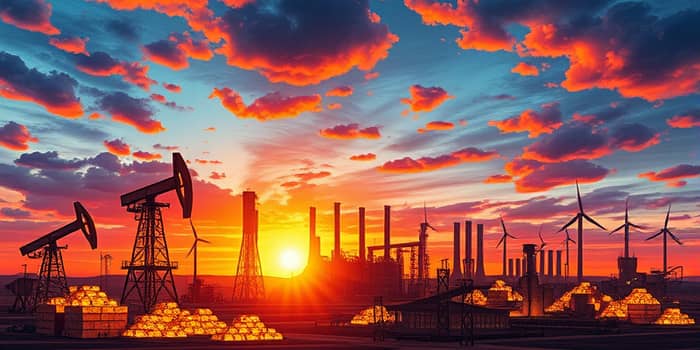
In an increasingly complex economic environment, commodity futures serve as powerful barometers for gauging the trajectory of industrial expansion. By examining price movements and trading volumes, market participants can anticipate shifts in production, investment flows, and even policy decisions.
This article explores how futures on metals, energy, and agricultural products reveal deeper patterns in global manufacturing, infrastructure development, and sustainability transitions. We’ll uncover practical strategies for investors, policymakers, and business leaders to harness these insights.
Commodity futures contracts lock in prices for delivery at a future date. Beyond hedging risks, these instruments reflect the balance of supply and demand, economic sentiment, and structural shifts in key sectors.
When industrial metals capture global growth, they often lead official data releases like industrial production and GDP. Traders price in expectations of factory output, construction projects, and consumer durable demand long before government reports arrive.
Similarly, energy futures—spanning crude oil to natural gas—respond rapidly to geopolitical tensions, inventory reports, and policy signals. These price moves feed into cost structures across manufacturing, transportation, and power generation.
The year 2025 witnessed dramatic swings across precious metals, base metals, agriculture, and energy. Understanding these trends provides context for future growth prospects and risk management.
Commodity futures correlate strongly with standard economic indicators. By tracking these relationships, analysts can anticipate turning points in growth and inflation.
Below is a summary of key macroeconomic metrics and their relevance to futures markets:
Each commodity sector offers a unique lens on industrial dynamics. By focusing on their individual drivers, stakeholders can align strategies with emerging trends.
How can one turn commodity futures signals into actionable plans? Below are practical steps to integrate these insights into decision-making:
1. Monitor Key Futures Benchmarks Regularly. Track benchmark contracts like gold, copper, Brent crude, and corn. Sudden price shifts often precede data releases by weeks.
2. Combine Technical and Fundamental Analysis. Use moving averages and momentum indicators to confirm trend signals from supply-demand reports and inventory data.
3. Diversify Across Correlated Sectors. If base metals indicate accelerating industrial output, consider exposure to energy futures and manufacturing equities to capture the full growth cycle.
4. Align Policy Expectations with Commodity Trends. Regulators and central banks should factor commodity-driven inflation pressures into rate-setting frameworks, while infrastructure planners can use metal futures to gauge project cost trajectories.
Looking beyond short-term cycles, the energy transition and technological innovation are reshaping long-term demand patterns. Pivot toward sustainable energy assets means battery metals will likely outperform traditional fuels over the next decade.
Emerging markets are also key drivers. Rapid urbanization in Asia and Africa demands vast infrastructure investment, underpinning robust base metal consumption through 2035. Policymakers can leverage futures signals to prioritize resource efficiency measures and recycling initiatives.
Commodity futures offer a unique vantage point on the health and direction of industrial economies. By interpreting these price signals thoughtfully, investors can position portfolios ahead of growth cycles, and policymakers can fine-tune economic strategies to foster resilience.
As 2025 has shown—with soaring metals, fading agriculture rallies, and energy market upheavals—the story of industrial growth is written in the futures pits. Embrace these insights, apply practical risk management, and you will be well-equipped to navigate and shape the next era of global development.
References