
Search
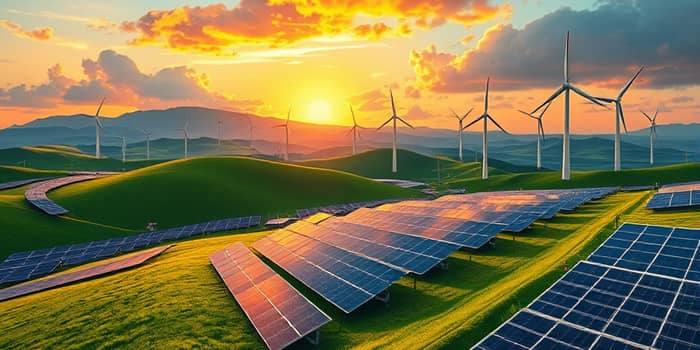
In recent years, the global energy landscape has shifted dramatically. Falling costs and record capital flows have driven a profound transition away from traditional fossil fuels. In 2024, clean energy investments reached a landmark total of US$2.1 trillion, outpacing fossil fuel expenditures for the first time. Renewables accounted for over 90% of all new power additions worldwide, underscoring their dominance in the future energy mix.
This article examines the core reasons why renewable energy represents a compelling investment opportunity. From strong economic returns to enhanced energy security and vital climate benefits, the case for investment is clear and urgent.
Renewable energy projects deliver unparalleled economic returns and savings by harnessing free natural resources and driving down operating costs. Solar and wind now represent the cheapest form of new power generation in most countries, enabling utilities to offer lower electricity prices and households to invest savings elsewhere.
Globally, every dollar invested in clean energy returns significant GDP growth and local earnings. In the United States, renewable investments reached US$92.9 billion in 2023, up from US$29.1 billion a decade earlier. Private solar investment alone exceeded US$60 billion, supporting 18,000 new jobs in 2024 with 5.3% annual growth. Utility-scale solar, wind, and storage projects commanded US$743 billion in capital across all 50 states, enough capacity to power 79 million homes and an additional 19 million via storage integration.
Localized deployment further amplifies benefits. Small-scale solar installations offer resilience to policy shifts, as seen in China’s doubling of distributed solar investment despite a downturn in utility-scale projects. These developments showcase job creation across diverse roles—from manufacturing and installation to maintenance and grid integration—fueling regional economic resilience.
Global clean energy investment surged by 10% year-on-year in the first half of 2025, reaching US$386 billion, driven by offshore wind expansions and distributed solar growth. Projections estimate that annual investments will climb to US$1.5 trillion by 2030, up from US$570 billion in 2023.
Under COP28 targets, renewables’ share of electricity generation could leap from 8% in 2024 to 87% by 2060, tripling capacity and doubling efficiency by 2030. This transition is forecast to add US$1.3 trillion to global GDP by mid-century.
Investing in renewables is not only a financial decision but a moral imperative. Without swift action, global temperatures could rise by 3°C by 2100, resulting in an estimated 15–34% loss in global GDP due to extreme weather, agricultural collapse, and health crises. A comprehensive clean energy transition can limit warming to under 1.8°C and secure universal electricity access.
Beyond carbon reduction, renewable energy yields environmental benefits beyond carbon reduction, such as improved air quality, water savings, and enhanced biodiversity. Forward-looking investors contribute to a healthier planet while capturing stable returns.
Localized generation from solar, wind, and storage systems reduces dependency on imported fuels and shields regions from volatile commodity markets. Post-Ukraine crisis, Europe accelerated its clean energy deployment with Germany’s €100 billion Climate Fund aimed at achieving climate neutrality by 2045. By decentralizing power sources, communities gain localized production reduces import dependence, bolstering resilience against geopolitical shifts.
Rapid advancements in turbine design, photovoltaic efficiency, and battery technology are driving down costs and unlocking new deployment models. Innovations like bifacial panels, floating solar arrays, and digital grid management platforms are catalyzing growth, while innovation and supportive policy frameworks—including tax credits, auctions, and green bonds—enhance investor confidence.
Outlook studies by leading consultancies forecast annual U.S. additions of 30–66 GW of solar, wind, and storage between 2026 and 2030. Meanwhile, corporate demand for clean power and the rise of AI-driven data centers drive sustained load growth, reinforcing the need for scalable renewable capacity.
No investment is without risk, but the renewable sector offers clear strategies to mitigate common challenges. Policy volatility and interest rate fluctuations can be hedged through diversified portfolios spanning geographies and technologies. Revenue variability from negative market pricing can be addressed via energy storage, long-term offtake agreements, and capacity markets.
Overall, the fundamental drivers—declining costs, predictable cash flows, and growing demand—provide a robust foundation for long-term growth.
The momentum behind renewable energy is undeniable. With record investments, falling technology costs, and unwavering policy support, the sector stands at the cusp of exponential growth. Investors who act today will secure predictable returns and long-term stability while playing a pivotal role in safeguarding the planet’s future. The window to capitalize on this transformation is open—embrace the renewable revolution and reap the rewards of a sustainable energy economy.
References