Search

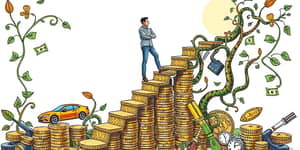
In a world fixated on market indices and portfolio growth, one investment stands out above the rest: you. For decades, financial advisors have celebrated the S&P 500’s average annual return of 8-10% nominal annual gains. Yet when you account for roughly 2-3% inflation, those real returns shrink to about 6-7% per year. By contrast, self-investment offers not just numbers on a screen but transformational changes in career, wellbeing, and quality of life that no downturn can erase.
When you master a new skill or embrace healthier habits, you unlock off-the-charts returns that compound over the decades. Unlike stocks and bonds, this growth cannot be seized away by market corrections or unforeseen recessions. It is yours to keep, nurture, and build upon for the rest of your life.
The term return on investment (ROI) is commonly applied to financial assets, but its most powerful application applies to you. While a $10,000 investment in the S&P 500 might grow to $25,937 in ten years at a 10% compounded rate, your personal ROI can exceed these figures by unlocking promotions, new job opportunities, or entrepreneurial ventures.
Moreover, stock market returns are unpredictable. Historically, the S&P 500 has produced 11.45% since 1950, but averages tumble to single digits over various periods. Inflation erodes purchasing power and volatility tests investors’ courage. In contrast, psychological and skill-based gains are guaranteed to accrue with commitment.
Quantifying personal growth is more complex than tabulating financial statements, but the outcomes speak for themselves. A newly acquired certification or a business idea validated in the market can multiply your income far beyond the static growth rates of financial instruments.
To illustrate the contrast in a familiar format, consider the following breakdown:
Even the most conservative estimates place personal growth ROI well above savings rates. If learning a new programming language or leadership skill can deliver a 15-20% boost in salary, and those gains compound as you progress, the long-term payoff becomes staggering.
Beyond cold hard dollars, self-investment yields confidence, control, and life satisfaction. Learning, health, and creativity pay intangible but invaluable dividends that shape your mindset and resilience.
Generational surveys underscore this truth: 60-66% of Americans feel better positioned than previous cohorts, driven by continuous learning and self-improvement. This psychological edge is uncorrelated with market cycles yet profoundly influences long-term success.
These psychological dividends often spark a virtuous cycle: as your confidence grows, you take on more challenges, leading to further skill acquisition and network expansion. In periods of market uncertainty, you retain purpose and agency, experiencing stability that many investors envy during bear markets.
Embarking on a self-investment journey requires deliberate planning and resource allocation. Finance professionals suggest allocating 10-20% of your income to learning and development, just as you would toward traditional investing.
Remember that time and energy are finite resources. Prioritize high-impact activities. For instance, dedicating thirty minutes daily to reading industry publications or practicing a new language can yield outsized outcomes over months and years.
Investing in yourself does not require neglecting conventional financial safeguards. In fact, pairing self-development with debt reduction and a basic investment portfolio creates a robust, hybrid strategy.
Real-life case studies showcase individuals who transformed their earnings by shifting focus from passive investments to targeted self-development. From teachers launching online courses to engineers transitioning into leadership roles, these stories validate the power of targeted personal growth.
When you view yourself as the most valuable long-term investment, every dollar and hour spent on growth compounds indefinitely. Stocks may surge by 14.28% over five years, but the confidence, mastery, and opportunities you gain through self-investment are beyond comparison.
Ultimately, the question is not whether you can afford to invest in yourself but whether you can afford not to. The compounding effect of personal growth dwarfs typical market returns, offering both financial and emotional security.
Your journey to remarkable returns begins today. Place your bets on the surest asset you will ever own: yourself.
References