
Search
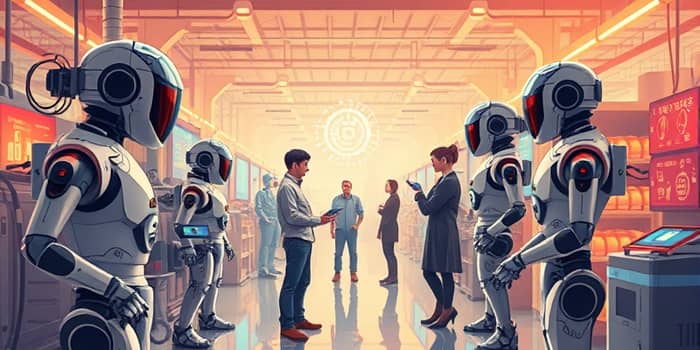
As we stand on the brink of a new industrial revolution, automation promises to reshape economies, industries, and lives. This article explores how strategic investment in automation can unlock prosperity and empower individuals, while navigating the challenges of workforce change. By balancing data-driven insights with real-world examples, we chart a path toward a future where technology and humanity thrive together.
Global labor productivity has faced headwinds from aging populations and declining birth rates. Yet, with 2% annual labor productivity growth potential, automation offers a lifeline. Experts estimate that digital technologies could account for up to 60% of this growth over the next decade, revitalizing output across sectors.
Corporate leaders are already witnessing the benefits. Companies that allocate at least 20% of their IT budgets to automation report average cost reductions of 17%, compared with 7% savings at lagging firms. Meanwhile, federal incentives and reshoring trends motivate 95% of U.S. industrial businesses to adopt new automation solutions within three years.
Automation will not eliminate entire occupations overnight; only 5% of roles are fully automatable today. Instead, around 30% of activities across 60% of occupations can be delegated to machines, leading to evolving job descriptions. For example, warehouse workers at Amazon now monitor and troubleshoot robots rather than manually lifting heavy loads.
To thrive, employees must embrace lifelong learning and continuous reskilling. The most in-demand capabilities will blend technical proficiency with human insight.
Every sector is undergoing a metamorphosis. In manufacturing, robots deliver precision assembly and quality control, freeing human workers to oversee systems and optimize processes. Retail has embraced self-checkouts and AI chatbots, enabling cashiers to become customer experience ambassadors. In healthcare, emerging AI-driven diagnostic tools analyze scans, aiding doctors in early disease detection and personalized treatment plans.
Logistics firms deploy autonomous vehicles and smart warehouses to accelerate delivery times, while creative agencies leverage AI content generators to draft marketing campaigns. Even small businesses are experimenting with robotics-as-a-service models to overcome capital constraints and skill shortages, democratizing access to advanced automation.
For investors, the automation wave offers multiple entry points. Beyond pure-play robotics firms, thematic exchange-traded funds provide diversified exposure to technology, industrials, and AI innovators. Companies successfully integrating automation often outperform peers in cost efficiency and speed to market.
Strategic investment in automation technologies can yield substantial returns, particularly when aligned with broader macroeconomic drivers such as aging workforces and labor scarcity. Leasing models and robots-as-a-service lower barriers to entry, while federal tax credits and incentives enhance project viability.
Despite its promise, automation carries risks. Skills mismatches, upfront capital costs, and potential inequality could derail progress if not managed proactively. Organizations that neglect change management or centralized governance may struggle to capture high-value use cases.
Looking ahead, work will evolve into dynamic human-machine partnerships, where routine tasks yield to creative problem-solving and strategic oversight. As automation accelerates skill shifts seen over the past 15 years, individuals and organizations who invest in productive collaboration between humans and machines will unlock new levels of performance and fulfillment.
Now is the moment to embrace change. By committing resources to technology, training, and thoughtful governance, stakeholders can help shape a utopian outcome—one in which routine drudgery gives way to innovation, wages rise, and personal growth flourishes. The automation era beckons: will you seize the opportunity to lead, invest, and transform?
References