
Search
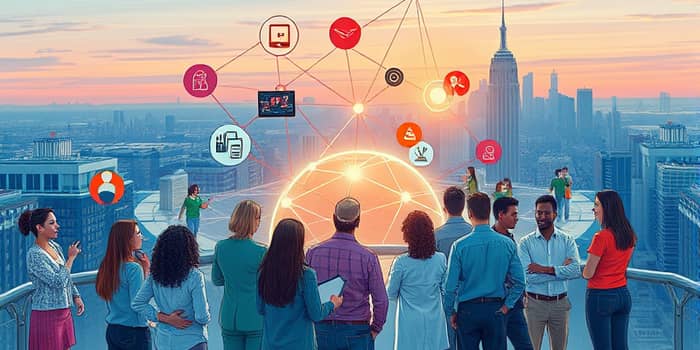
In today’s rapidly evolving global landscape, human capital stands as the driving force behind sustainable growth, innovation, and prosperity. By understanding its components and leveraging strategic investments in people, nations and organizations can unlock unprecedented potential.
From formal education to on-the-job training, the layers of skills and experience that individuals accumulate form the bedrock of a thriving knowledge economy.
Human capital encompasses more than mere labor; it includes the entire spectrum of what people bring to productive processes. At its core, it consists of accumulated:
In a knowledge-intensive production process, these elements underpin individuals’ capacity to adapt to new technologies, navigate complex challenges, and contribute to innovation.
Empirical evidence shows that human capital fuels both aggregate productivity growth and firm-level competitiveness. In a typical OECD country between 1960 and 1990, human capital accounted for 22% of productivity growth and explained 45% of international productivity differentials.
Moreover, adding one year of intermediate education can boost immediate output by 5%, followed by another 5% in the long term. Such gains illustrate the profound impact of skill-biased technological change and lifelong learning on economic trajectories.
At the microeconomic level, research highlights a clear link between training and wages. Employees who engage in on-the-job learning can see wage increases of up to 5% per year, while formal schooling yields an average premium of 6.5% across Europe—and even higher in less-regulated markets.
Quantifying human capital is essential for policy planning and organizational strategy. The World Bank’s Human Capital Index (HCI) evaluates health and education outcomes on a scale from 0 to 1, projecting the productivity potential of today’s children.
HCI+ further integrates metrics on employment rates and social protection, offering a comprehensive view of workforce readiness. As of 2026, 97 governments have committed to harnessing HCI data to shape development agendas.
Despite the clear benefits, skill shortages and surpluses often coexist due to mismatches between supply and demand. Addressing these gaps requires targeted interventions at multiple levels:
Positive externalities from education and training amplify these efforts, creating virtuous cycles of innovation and growth that benefit entire communities.
Human capital forms the backbone of effective knowledge management (KM). Studies reveal that talent investment explains nearly half of the variance in KM effectiveness, with coefficients indicating strong positive relationships between human capital and organizational learning.
Furthermore, KM practices serve as mediating channels through which human capital drives innovation. By capturing and disseminating expertise, firms unlock latent ideas and accelerate the diffusion of new technologies.
This synergy underscores the importance of aligning workforce development strategies with robust knowledge-sharing frameworks.
Organizations and policymakers can take concrete actions today to cultivate human capital and sustain long-term prosperity:
By embedding these practices into organizational cultures and policy frameworks, we can maximize the return on human capital investments and foster resilience in the face of rapid technological change.
As the world transitions deeper into knowledge-based economies, human capital emerges as the most precious resource. Its development not only drives productivity and innovation but also enriches lives and communities.
By embracing a holistic approach—spanning education, training, knowledge management, and inclusive policies—stakeholders can unlock the full spectrum of human potential. This collective effort will shape a future where creativity, collaboration, and continuous learning propel societies toward shared success.
References